

KALE BRANCH OF POITOU AB
Brassica oleracea var. sabellica
 Récolte
Conseils de semis
Cycle de vie : biennial
Durée de levée : 5 to 10 days
Température de levée : 20 to 22°C
Technique de semis : in pocket
Profondeur de semis : equal to the seed size
Contenants de semis : in a bucket / in open ground
Conseils de culture
Description
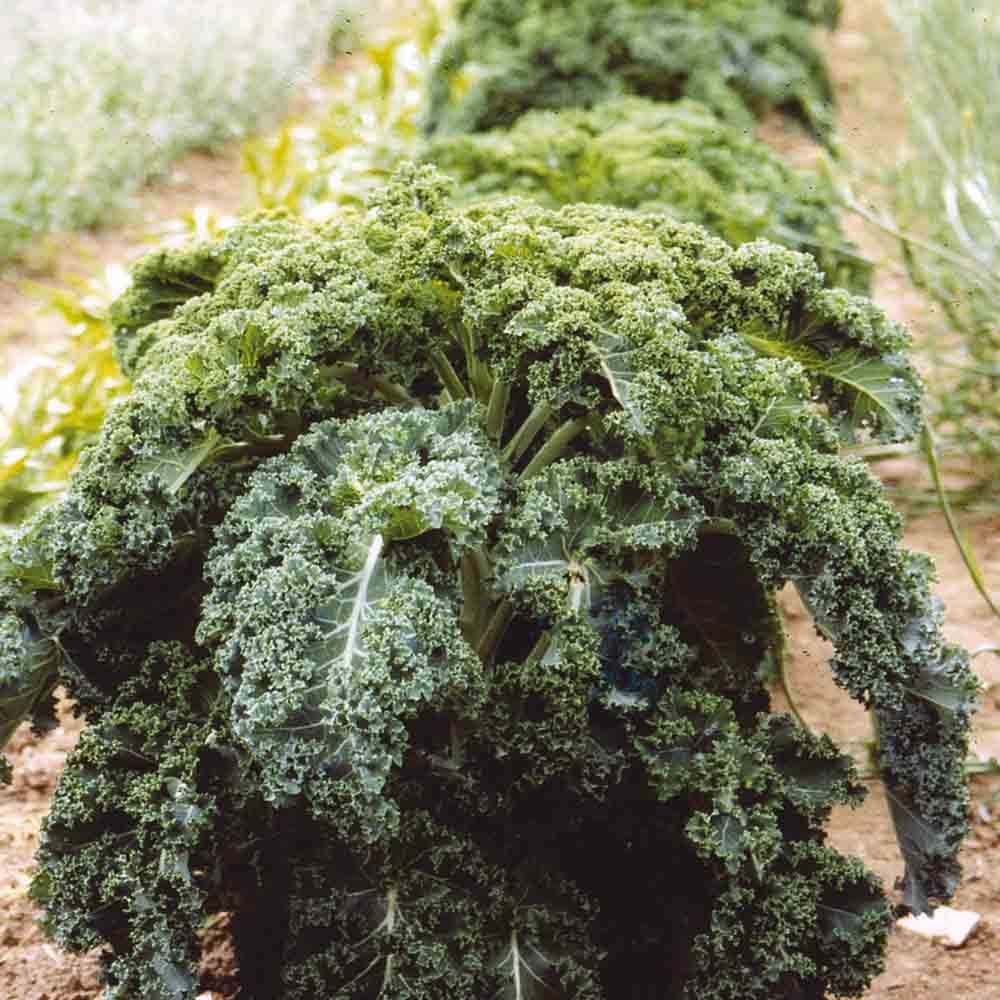
A very old and productive variety of non-headed cabbage. It produces numerous stems bearing elongated leaves with wavy edges. Traditionally grown in western France, in Anjou and neighboring regions, this variety is notably used to make the soup known as "aux houx verts" (Green Holly Soup) (Vilmorin-Andrieux, Potagères 1904). Its harvest is extended.
How to Successfully Sow Kale
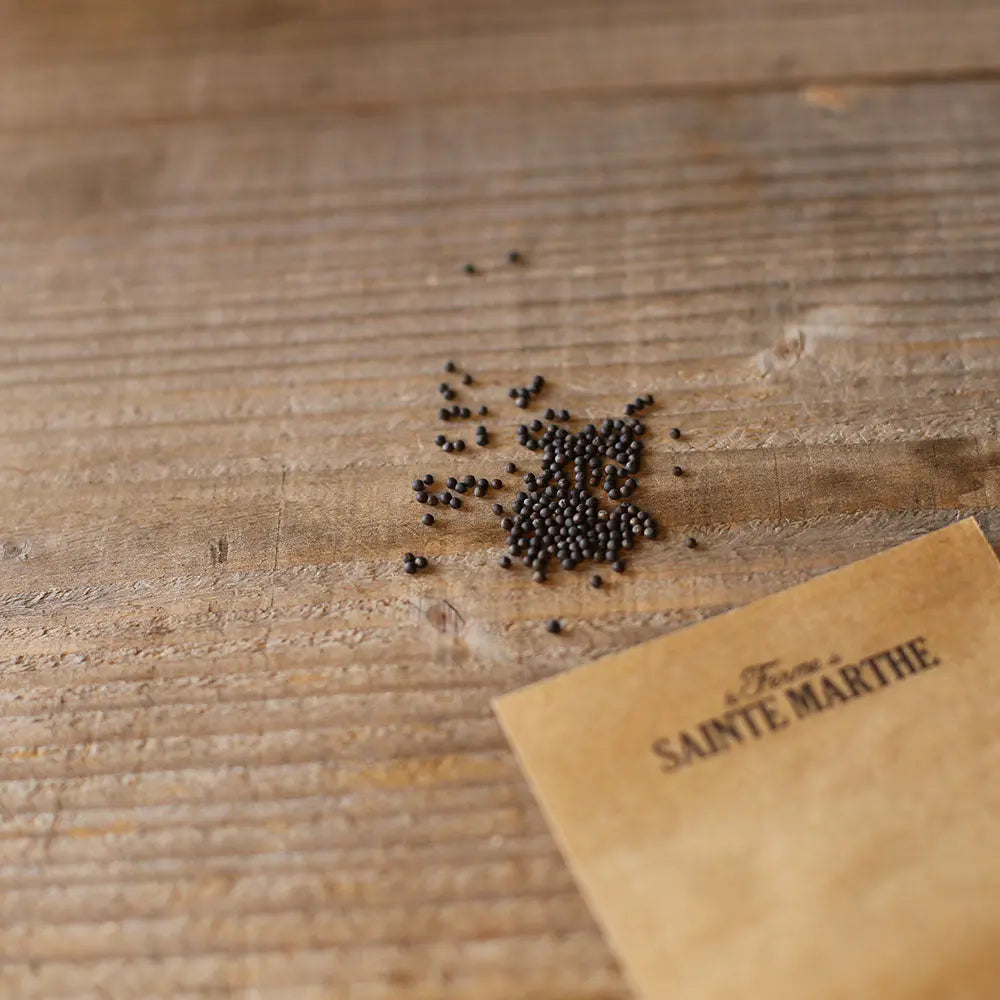
Sow seeds 0.5 cm deep from February to June in a nursery, 1 cm deep. Do not pack the soil to allow the seedlings to reach the light more easily.
To germinate, kale seeds require a temperature between 7°C and 20°C for approximately 10 days.
Planting Kale
Transplant in place when the plants have 4 leaves, 80 cm apart in all directions, in fertile, deep, fresh and humus-rich soil, in a sunny location.
Mulch and water at the base.
Protect with a winter fleece if severe frost is forecast.
Kale thrives in rich, clayey soils, but will grow in most types of soil as long as it is cool.
Harvest
Kale leaves are harvested from June to September.
The Enemies
Slugs : Install slug barriers around crops.
White butterfly : Spray tansy decoctions or install an insect net.