

TOMATO GREEN ZEBRA AB
Solanum lycopersicum
 Récolte
Conseils de semis
Cycle de vie : annual
Durée de levée : 7 to 10 days
Température de levée : 20 to 25°C
Technique de semis : in pocket
Profondeur de semis : equal to the seed size
Contenants de semis : in bucket
Conseils de culture
Description
With their different colors and shapes, tomatoes will make your vegetable garden a place of curiosity. Their aroma and flavor will introduce you to the pleasure of rediscovered taste.
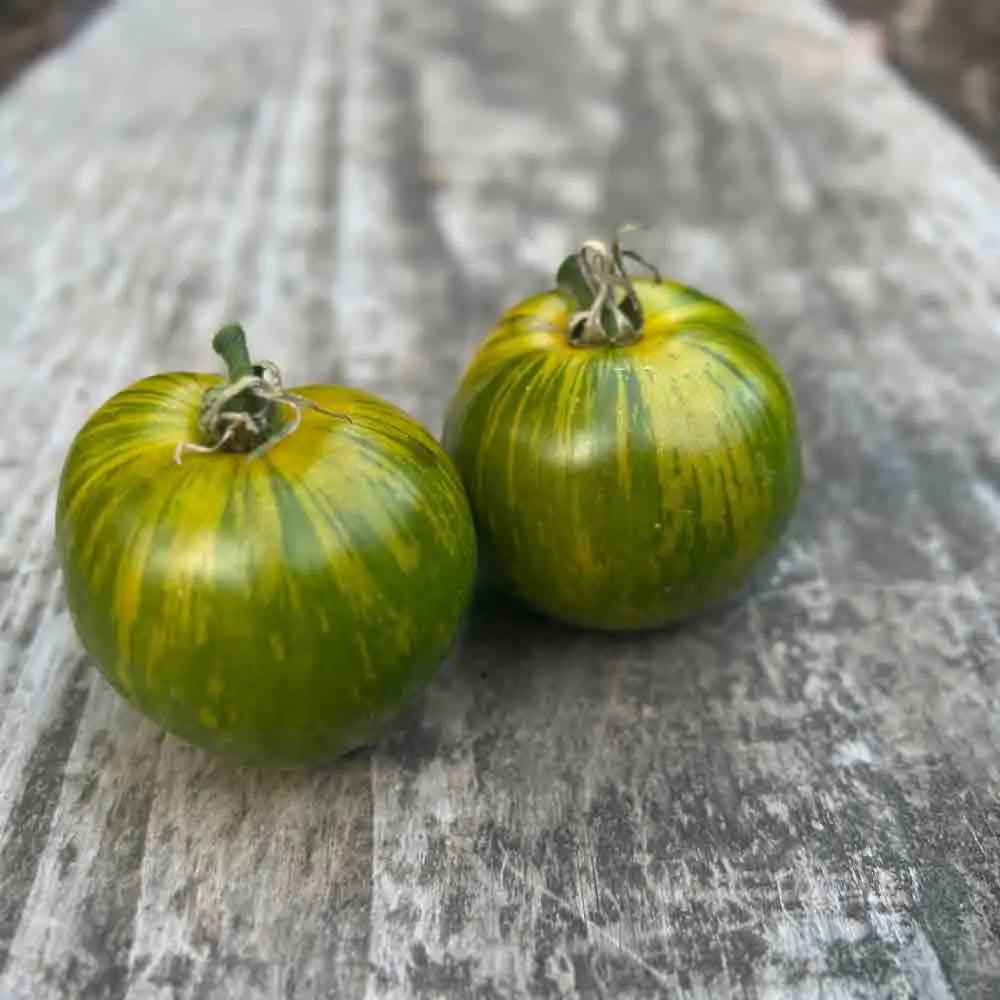
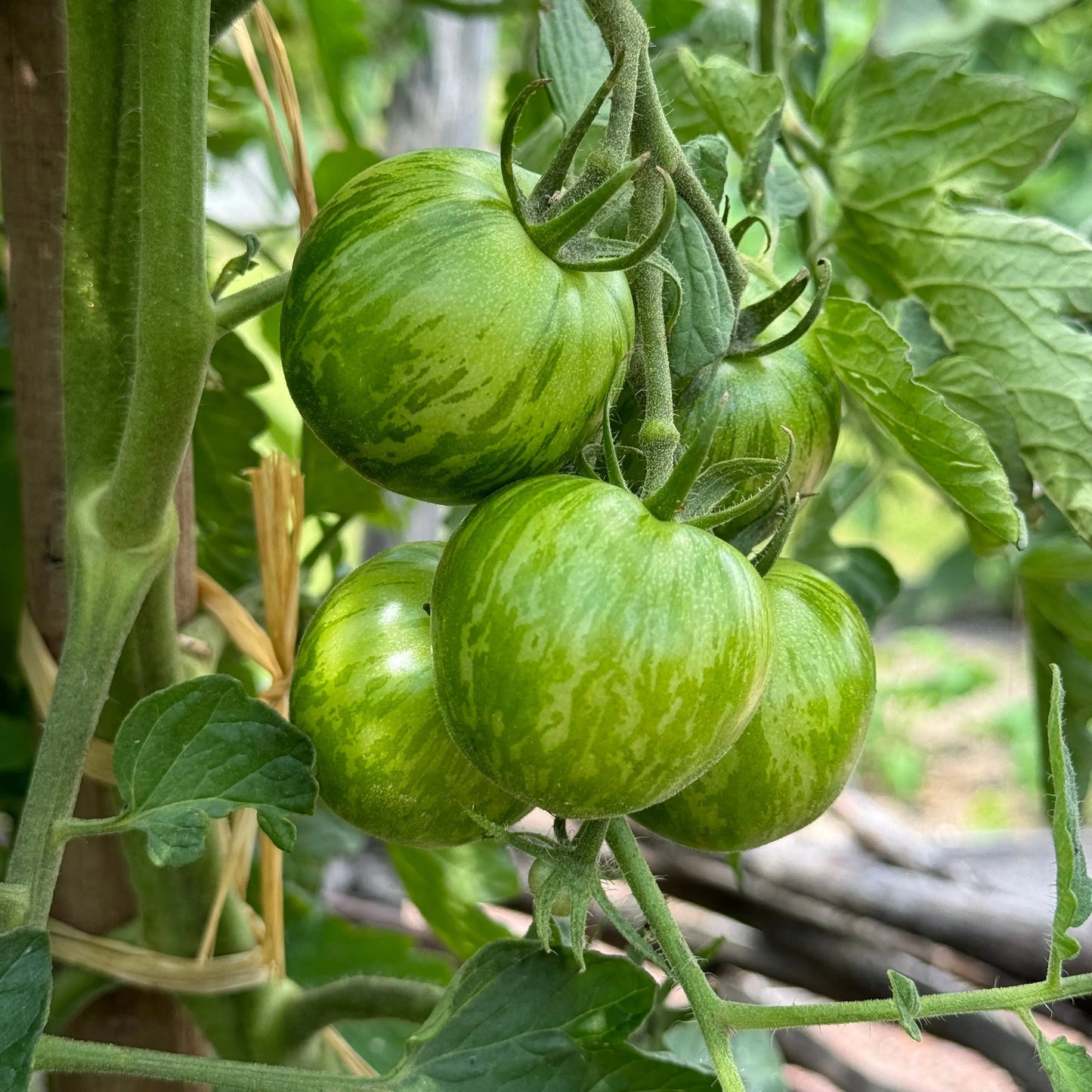
The Green Zebra tomato is a mid-season variety, producing clusters of 6 to 8 fruits, weighing 80 to 120 g. Six centimeters in diameter, the fruit is harvested at the yellow, green-striped stage, when it is moderately firm. Its emerald green flesh is juicy, dense, sweet, and slightly tangy, making it excellent and tasty in salads, preserves, or candied foods.
When and how to sow Green Zebra tomatoes?
Sowing: from February to April in a warm bed (20°) or in pots indoors or in a heated greenhouse, in fine seed compost. Tomatoes need a constant minimum temperature of 20°C to germinate.
Bury your tomato seeds 1 cm deep and then cover with seed compost. Water your compost with a sprayer to keep it moist but not soggy. Place your seed tray near a window to prevent your seedlings from shooting upwards in search of light.
Transplant when frost is no longer a risk and the plants are 12 to 15 cm tall in rich, loose, healthy soil. Space 70 cm between rows and 50 cm in the sunny row.
Place the stakes in place before starting to plant. Water thoroughly at the base once a week to prevent disease development.
Should we remove suckers from tomato plants?
Opinions differ on how to approach the infamous pruning of tomatoes, and every gardener has arguments to support their theory. To the question "what to do?" the answer is simple: whatever you want!
Pruning tomatoes by de-suckering is not mandatory; it is intended to increase the size of the fruits, their precocity and to facilitate harvesting work.
This method, however, has two drawbacks: it requires time and discernment. Indeed, the head of the tomato plant is not always easy to distinguish from a secondary branch. Furthermore, removing suckers causes wounds for your plant. It is therefore strongly recommended to consider aiding healing with a dusting of maerl or a green clay wash.
Another option is to not prune at all and allow the plant to fully develop. It will therefore need more space in the garden, i.e. 1 m between each plant. The fruits will be smaller but more numerous.
A third solution is two-pronged training. After pinching the plant 20 cm from the ground, only the two lateral shoots are kept. All the suckers are then removed.
Harvest
You can harvest tomatoes 4 to 5 months after sowing.
The enemies
The main problems that can be encountered when growing tomatoes are late blight and blossom end necrosis (black bottom).
To prevent mildew, the best solution is to protect your plants if you live in a region where it rains frequently. You can also treat your plants with Bordeaux mixture.
Blossom end necrosis, or black bottom, is not a disease. It's caused either by low calcium levels in the soil or by irregular watering. When a plant lacks water, it produces less sap, and the part furthest from the stem will die due to lack of nutrients. Therefore, water regularly, thoroughly once a week, for example.