

CARROT AMSTERDAM 2 AB
Daucus carota
 Récolte
Conseils de semis
Cycle de vie : biennial
Durée de levée : 8 to 15 days
Température de levée : 10 to 30°C
Technique de semis : online
Profondeur de semis : equal to the seed size
Contenants de semis : in the open ground
Conseils de culture
Description
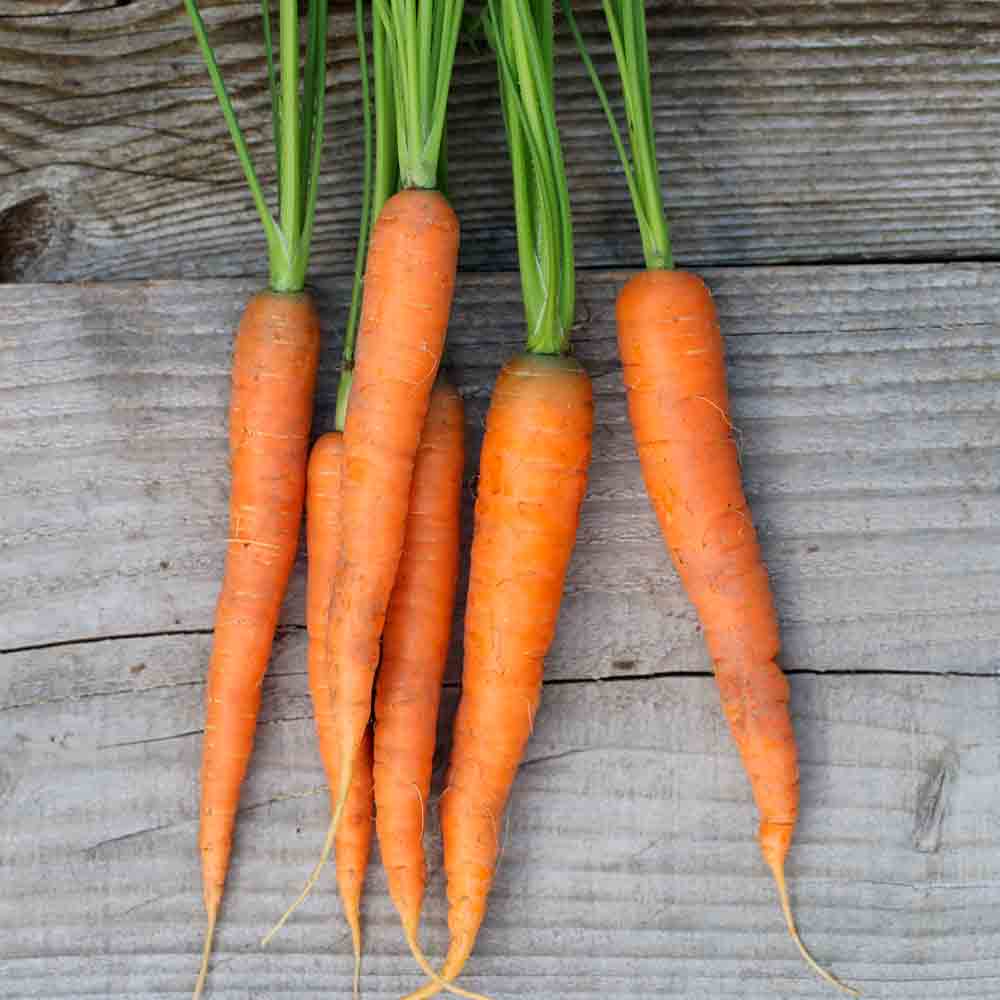
Early variety, with a half-long cylindrical root, without heart, suitable for early spring cultivation or autumn sowing under cover for very early spring harvests. Good taste quality and good storage. Sowing: from February to April (under cover in autumn). Harvest: from June to August.
Successful sowing of Amsterdam carrots 2
- Spring sowing, from February to April for summer harvest.
- Autumn sowing, in October/November for spring harvest.
Prepare the seedbed very well: refine the soil well, water the soil, sow thinly in rows 25 to 30 cm apart, in a sunny location and cover with a mixture of very fine soil and sand a few millimeters deep. Water with a light rain. Place a P17 type fleece over the seedbed to keep the soil moist and prevent the surface from drying out, keep moist until the seedlings develop.
Thin out once to 4 or 5 leaves at 2 or 3 cm then to 7/8 cm.
Hoe and weed regularly. Water during dry periods.
Good pairings with carrots
You can combine your carrot crops with radishes, which means you don't have to thin out the carrot row several times, and radishes also keep red spider mites away.
Near your carrot crop you can grow onions, garlic or even leeks, they will be beneficial to the carrot by repelling the fly.
Preserving carrots
Let your carrots dry for 1 to 2 days on the ground, cut the leaves off at the root collar, and clean them without washing them. When they are dry, place them in sand in the cellar.
Enemies of the carrot
The main pest of carrots is the carrot fly. The larvae of this fly tunnel into the roots, working their way down to the tip. The heaviest infestations occur in July/August.
The foliage of affected carrots turns yellow and wilted. The best way to combat carrot flies is through prevention, using the right combinations of tansy and lavender decoctions, as well as applying an insect repellent.
Root aphids can also cause significant damage, which can be controlled with a treatment based on nettle manure.
Comment conserver ses carottes ?
Il faut couper le feuillage au-dessus du collet. Ensuite, on conserve les racines en cave ou en silo avec de la paille ou enterrées dans le potager. L’idéal étant de les conserver dans un lit de sable ; de cette manière elles se conserveront 3 à 4 mois.
Quels sont les bienfaits de la carotte ?
La carotte est un légume riche en bêta-carotène, un pigment que l'organisme transforme en vitamine A. Elle contribue ainsi au maintien d'une vision normale et au bon fonctionnement du système immunitaire. Peu calorique et source de fibres, la carotte trouve facilement sa place dans une alimentation équilibrée, crue ou cuite.
Quel est le temps de pousse d’une carotte ?
Les carottes mettent entre 3 à 4 mois à sortir de terre et à atteindre le stade de la consommation. Vous pouvez également les récolter plus tôt (2 à 3 mois) pour obtenir de petites carottes tendres, dites « primeurs ».
Pourquoi mes graines de carotte ne germent pas ?
Il existe plusieurs raisons au fait que vos graines de carotte ne germent pas :
- Vous avez semé trop tôt ou trop tard.
- La terre n’était pas assez humide pour favoriser la germination des carottes.
- Des carottes ont été semées au même endroit plusieurs années de suite et la terre ne dispose plus des nutriments essentiels au développement des carottes.
Faut-il éclaircir les carottes ?
C’est en effet préférable d’éclaircir vos carottes, surtout si vous avez semé vos graines très proches. Le fait d’éclaircir, et donc d’enlever quelques pieds, permet à vos carottes d’avoir plus de place pour se développer et d’éviter la concurrence racinaire avec leurs voisines.
Peut-on cultiver des carottes en pot ?
C’est possible mais pas le plus pratique ni le plus recommandé. Toutefois, si vous souhaitez tenter l’expérience, privilégiez un pot ou une jardinière profonde pour laisser de l’espace à vos racines. Remplissez de terre légère ou bien d’un mélange de terre et de sable et espacez vos semis. Le piège est de vouloir trop en mettre dans le pot : plus les plants sont proches, moins ils se développeront et plus petits ils seront.