
TUBEROUS CHERVIL AB
Chaerophyllum bulbosum
 Récolte
Conseils de semis
Cycle de vie : annual
Durée de levée : 180 to 200 days
Température de levée : 5 to 10°C
Technique de semis : online
Profondeur de semis : do not cover the seeds
Contenants de semis : in the open ground
Conseils de culture
Description
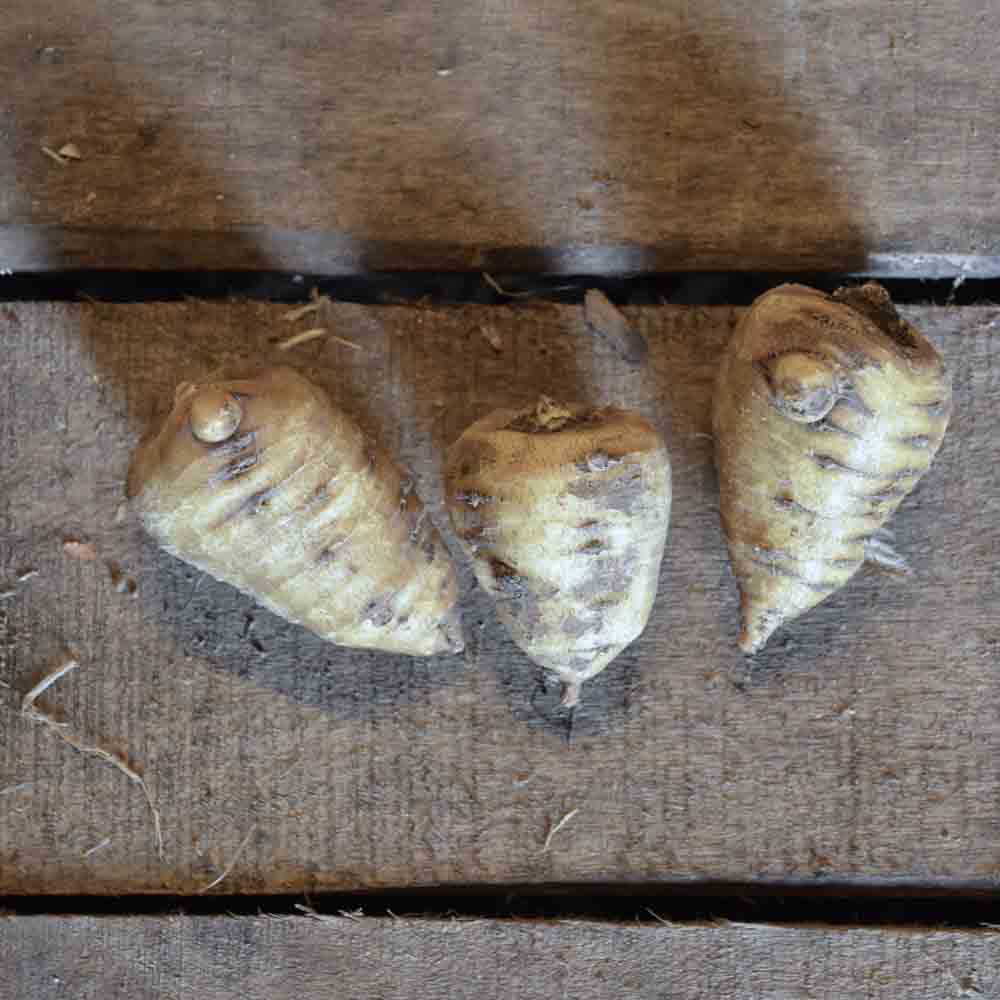
Root chervil is an ancient and forgotten root vegetable resembling a small conical carrot. Root chervil has an excellent, sweet, and melting flesh after cooking, somewhere between the taste of potato and chestnut. It can be eaten raw, grated, or cooked, mashed, pan-fried, in a pot-au-feu, in a cream, or as a side dish. Root chervil pairs well with red meat, pork, and chicken.
Chervil can be eaten like potatoes, parsnips, or Jerusalem artichokes, but be careful not to overcook it, as its flesh will become floury. Be careful, the leaves of chervil are toxic.
For this short-cycle variety, we bag and sell a batch in the same year. The short use-by date indicated on the bag is therefore always fairly close. It is recommended to sow the seeds within the year of purchasing the bag.
Successful sowing of tuberous chervil
There are two ways to germinate your tuberous chervil, which can be a fickle seedling. Tuberous chervil needs a cold spell to break its dormancy and germinate.
-
1st method : sowing in November/December for emergence in spring
Sowing: Lightly, in November-December in healthy, well-prepared soil (aerate your plot with a broadfork 4 weeks before sowing), in rows spaced approximately 25 cm apart every 2 cm. Do not bury the seeds; place them on a bed of seed compost and firm down. Seeds will germinate in the spring following sowing.
Thin out, leaving 8 to 10 cm between rows. Regular humus additions will be added throughout the growing season. This will consist of grass clippings, dead leaves, manure, and straw.
Frequent watering.
Harvest : June/July, when the yellow leaves spread out.
-
2nd method : sowing in February/March after stratifying the seeds
Stratify your seeds beforehand: mix your seeds with moist sand then place this mixture in an airtight container and in the bottom of your refrigerator for 3 weeks. Check the humidity of the sand once a week. Sow your seeds in healthy, well-prepared soil (aerate your plot with a broadfork 4 weeks before sowing), in rows spaced about 25 cm apart every 2 cm. Do not bury the seeds, place them on a bed of seed compost and firm down.
Thin out, leaving 8 to 10 cm between rows. Regular humus additions will be added throughout the growing season. This will consist of grass clippings, dead leaves, manure, and straw.
Frequent watering.
Harvest : June/July, when the yellow leaves spread out.
Preserving tuberous chervil
You can store your tuberous chervil in the cellar in a dry place, in sand for 2 to 3 months. Preserving it will enhance the flavor.
Le feuillage du cerfeuil tubéreux est-il vraiment toxique ?
Oui, le feuillage du cerfeuil tubéreux est toxique et ne doit jamais être consommé. Seule la racine se mange, cuite ou crue râpée. Il convient d'être particulièrement vigilant si vous cultivez cette plante dans un jardin fréquenté par des enfants ou des animaux.
Pourquoi faut-il stratifier les graines de cerfeuil tubéreux ?
Les graines de cerfeuil tubéreux ont besoin d'une période de froid pour lever leur dormance naturelle et germer. C'est pourquoi on les sème soit en plein hiver (novembre-décembre) pour qu'elles subissent le froid naturellement, soit on les stratifie artificiellement au réfrigérateur avant un semis de février-mars.
Pourquoi la date de péremption sur mon sachet de graines est-elle si proche ?
Le cerfeuil tubéreux est une variété à cycle court : les graines sont ensachées et vendues la même année, et perdent rapidement leur capacité de germination. Il est donc conseillé de les semer dans l'année qui suit l'achat du sachet.
Comment conserver le cerfeuil tubéreux après la récolte ?
Le cerfeuil tubéreux se conserve à la cave, dans un endroit sec, dans du sable, pendant 2 à 3 mois. Cette période de conservation améliore même sa saveur, qui devient plus sucrée.
Pourquoi ma chair de cerfeuil tubéreux est-elle farineuse ?
Une chair farineuse est généralement due à une cuisson trop longue. Comme la pomme de terre, le panais ou le topinambour auxquels on le compare souvent, le cerfeuil tubéreux doit être cuit avec attention, sans excès, pour conserver sa texture fondante.