

SQUASH LADY GODIVA AB
Cucurbita pepo
 Récolte
Conseils de semis
Cycle de vie : annual
Durée de levée : 10 to 15 days
Température de levée : 18 to 20°C
Technique de semis : in a bag of 3 seeds
Profondeur de semis : equal to the size of the seed, on the edge, point upwards
Contenants de semis : in a bucket / in open ground
Conseils de culture
Description
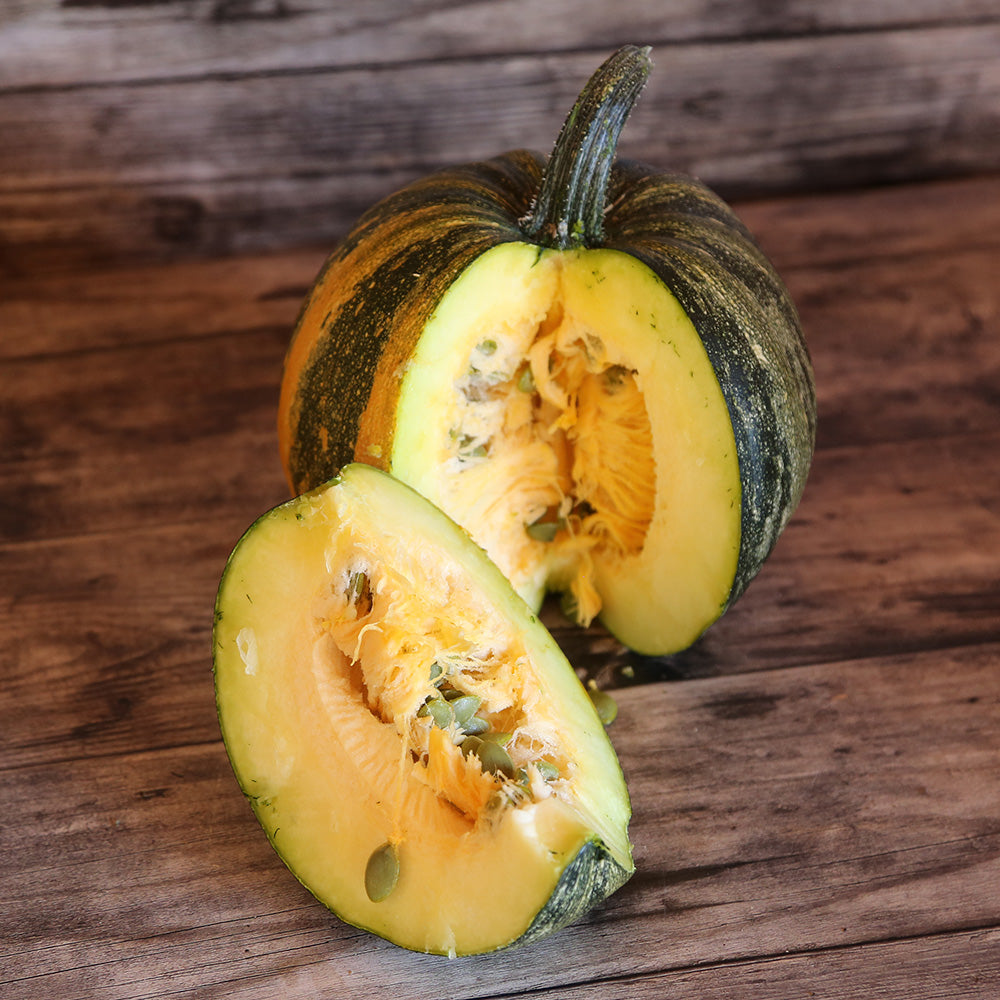
The Lady Godiva squash is a runner variety producing up to 15 fruits per plant, each 30 cm in diameter and weighing 3 to 9 kg. Its flesh is light orange, very pleasant for soups or ratatouilles. The Lady Godiva squash is known for its skinless seeds, very rich in zinc and isoprenoid substances that are harvested when the fruit is ripe. Its seeds are used in cases of prostate hypertrophy and against intestinal worms (pinworms) (Dr. VALNET). These virtues described by Paul Schauenberg in the guide to medicinal plants (Ed. Delachaux and Niestlé) show that its seeds are used as a remineralizer. Dried, the seeds of the Lady Godiva squash are eaten raw or roasted, and they are used in cakes like almonds.
How to successfully sow Lady Godiva squash
Sowing : in April, in pots in a bright location (temperature 20°C minimum, the seeds need warmth to germinate), place the seeds on their edges. Be careful when watering; you will need to keep the soil moist with a sprayer but not excessively so as not to rot the seed. Place your pots near a light source.
Growing Lady Godiva Squash
Plant out in a sunny position in mid-May, 1 m apart in all directions for non-running varieties and 1.20 m in the rows and 2 m between rows for running varieties. Compost is recommended. Pinch the stems to stimulate growth. Hoe and weed. Mulch the base to limit weed growth and preserve moisture. Water at the base in summer without wetting the foliage.
Good associations
Avoid placing it near potatoes. However, it will appreciate the proximity of beans and cabbage.
My pumpkin plant is not producing flowers or fruit.
This is a common problem encountered in many plants of the Cucurbitaceae family. High temperatures: in fact, it is very likely that the flowers borne by the feet are only male flowers (female flowers are differentiated by the presence of a swelling at the base, resembling a very young fruit). The high temperatures have affected the formation of female flowers and the quality of the pollen of the male flowers. Despite the presence of pollinating insects, there are therefore no fruits.
Lack of pollination: Pollination is carried out by pollinating insects moving from a male flower to a female flower. If your garden lacks these, then pollination and therefore fruiting will not occur. Attract pollinators near your cucurbit crops by sowing floral mixes, for example.
Harvesting and preserving squash
Between September and November, usually around October before the frost. One of the best ways to know when to harvest your squash is to observe the stalk, which turns corky when the fruit is ready.
Be careful, never pick up squash by this famous stalk because this would cause invisible lesions, which inevitably cause rot. The fruit should be cut as close as possible to the stem, left to dry for a day in the sun, then brought inside to a warm place, without knocking them of course, in a dry and ventilated place: between 12 and 20°C. For small quantities, the top of a cupboard or wardrobe in the house is ideal.