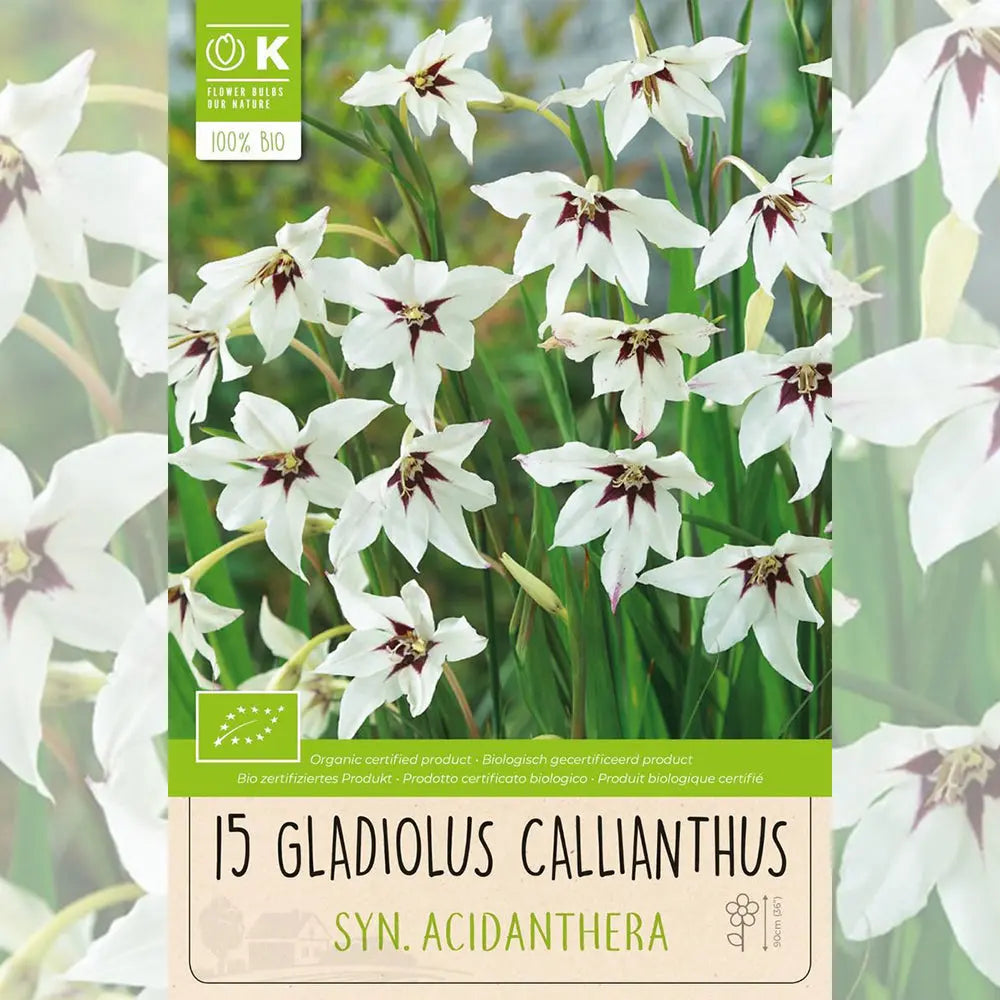

GLADIOLU CALLIANTHUS syn. ACIDENTHERA AB
 Floraison
Caractéristiques du bulbe
Cycle de vie : Perennial
Conseils de culture
Description
Gladiolus Callianthus , also known as Acidenthera or Abyssinian Gladiolus , is an elegant and refined plant. Its star-shaped, pure white flowers are beautifully highlighted by a dark purple center, giving off a delicate and captivating fragrance.
Reaching 80 to 100 cm in height , it flowers in late summer, bringing a touch of grace to flowerbeds, borders or pots. Ideal as a cut flower, it stands out for its long vase life. Easy to grow, this gladiolus prefers well-drained soil and a sunny location. Perfect for adding an exotic and elegant touch to the garden!
Planting gladioli
Plant the bulbs in moist soil 8-10 cm deep and 10-15 cm apart. You can plant as early as mid-autumn for early spring flowering (still protect the vegetation with dead leaves or straw) or in spring for late spring and summer flowering. Water regularly as the plant does not tolerate drought well. Don't hesitate to anticipate possible insect attacks (thrips, etc.) with a preventative treatment, especially as summer approaches.