
JAPANESE GOUMI - PLANT
Elaeagnus multiflora
 Récolte
Conseils de culture
Description
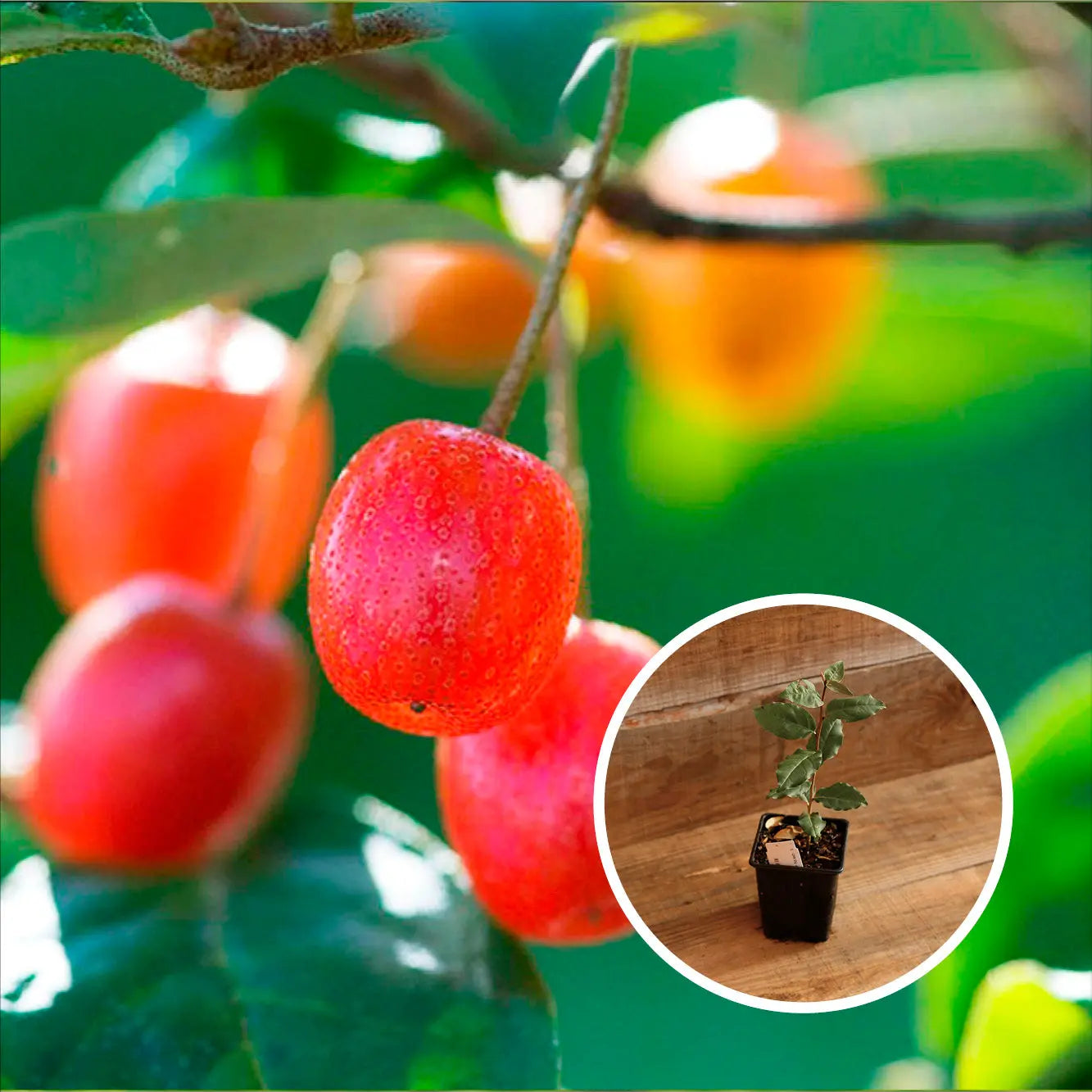
Elaeagnus multiflora, native to Japan. This self-fertile shrub, with a spreading habit, can reach a span of 2 to 3 meters. Its semi-evergreen foliage has a slightly shiny green upper side and a slightly gray lower side.
In April and May, it is covered with a very abundant flowering, with creamy white flowers, both fragrant and very melliferous. Its fruits, oblong and measuring between 1.5 and 2 cm long, turn from green to bright red when ripe, generally at the end of June or the beginning of July. These berries, very juicy and sometimes astringent, offer antioxidant properties, and are rich in vitamins A, C and E.
For its planting, it prefers light soils, with effective drainage to avoid excess water in winter. However, it also tolerates heavier and organic soils, provided they are deep and well drained, with a low limestone content. This plant, which fixes nitrogen, is ideal for hedgerows. Hardy to -25 ° C and resistant to wind, the Japanese Goumi adapts well to both coastal and continental climates. Although pruning is possible in winter, it is not essential.
Goumi is distinguished by its abundant production of translucent red fruits, edible at various stages of maturity, whether raw, cooked or dried. The astringency of the fruits, which can be more or less marked, diminishes during cooking, giving way to a pleasant aroma.
Le goumi du Japon est-il autofertile ?
Oui, il est autofertile, mais la présence d’autres plants favorise une meilleure pollinisation et une production plus abondante.
Peut-on cultiver le goumi du Japon en pot ou sur balcon ?
Oui, il est possible de le cultiver en grand pot avec un substrat léger et bien drainé. Assurez une exposition ensoleillée pour une bonne fructification.
Quels sont les bienfaits des fruits du goumi du Japon ?
Les fruits sont riches en vitamines A, C et E et en antioxydants. Ils contribuent à renforcer le système immunitaire et peuvent être consommés frais, cuits ou séchés.
Quel type de sol est le mieux adapté ?
Il préfère les sols légers et bien drainés, mais tolère aussi les sols plus lourds pourvu qu’ils soient profonds et non calcaires. Un bon drainage est essentiel pour éviter l’excès d’eau en hiver.
À quelle hauteur peut-il pousser ?
Le goumi du Japon atteint généralement 2 à 3 mètres de hauteur avec une envergure similaire, ce qui le rend adapté aux haies et aux massifs.