SICHUAN PEPPER TREE AB- PLANT
Zanthoxylum simulans
 Récolte
Caractéristiques de la plante
Cycle de vie : perennial
Conseils de culture
Description
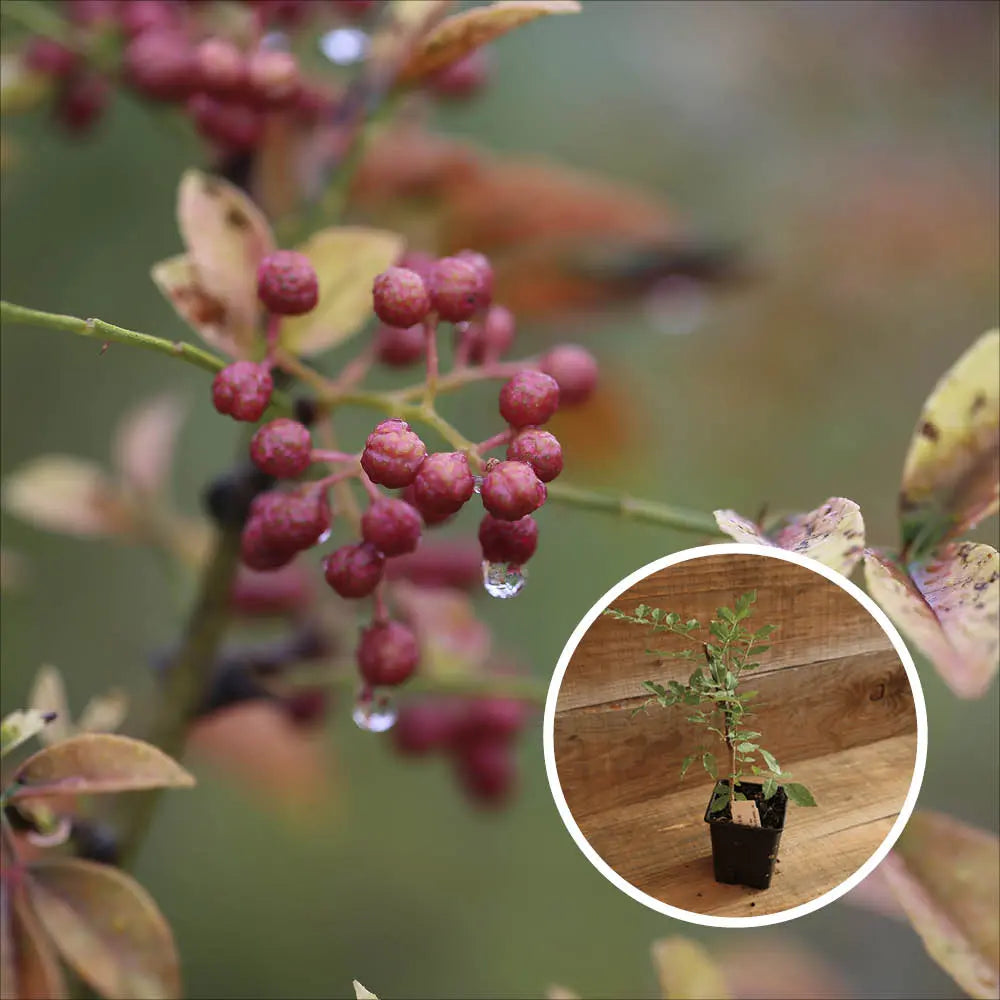
The Sichuan Pepper Tree is a remarkable tree , particularly for its foliage which changes with the seasons, going from green to yellow and then purple in autumn.
Carefully crushing its leaves reveals its powerful and distinctive fragrance. This pepper plant is also distinguished by its thorns. Over time, these thorns turn red. For successful planting, it is best to place it in full sun to encourage optimal fruiting. Although more hardy than the Timut pepper plant, it does not appreciate overly wet soil.
Harvest stage
Wait for the berries to turn bright red. The fruits are ready to harvest when the color is uniform and the berries begin to detach easily from the branches. Once harvested, the berries must be dried before using in cooking. Place them on a paper towel or a wire rack and let them air dry in a well-ventilated, shaded area. Drying can take a few days. Once dry, Szechuan berries retain their aroma and flavor.
Use
This pepper, once ground or crushed, is distinguished by a powerful and pungent flavor that can even cause a numb sensation on the lips when consumed fresh. Its aroma evokes aniseed and lemony notes. To use it as a spice, the red husk surrounding the black seeds is harvested, dried briefly, and then ground.
Le poivrier du Sichuan est-il rustique ?
Oui, il supporte bien le froid, mais préfère un emplacement ensoleillé et un sol bien drainé.
Peut-on utiliser les baies fraîches du poivrier ?
Les baies fraîches peuvent être utilisées, mais elles sont souvent séchées pour mieux conserver leur arôme et leur goût piquant.
Le poivrier du Sichuan a-t-il besoin de beaucoup d’eau ?
Il tolère des périodes de sécheresse, mais un arrosage modéré favorise la croissance et la fructification les premières années.
Ses épines sont-elles dangereuses ?
Les épines sont fines et surtout décoratives, elles ne présentent pas de danger important mais méritent de la prudence lors de la taille ou de la récolte.